

| Category | Hematology |
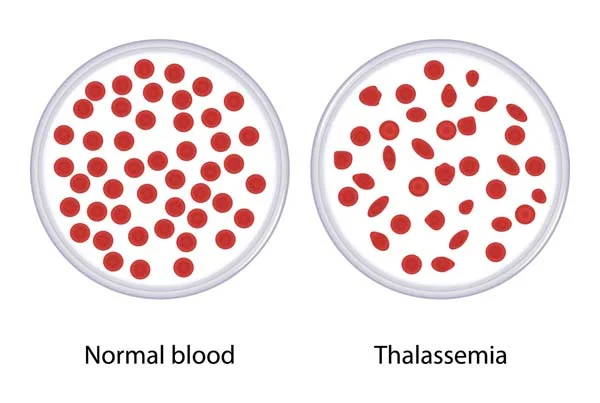
Thalassemia is an inherited blood disorder in which the body creates an abnormal form of hemoglobin. Hemoglobin is the protein molecule in red blood cells that carries oxygen. The disorder causes excessive destruction of red blood cells, leading to anemia. Anemia is a condition in which your body does not have enough normal, healthy red blood cells.
Thalassemia is hereditary, which means that at least one parent must be a carrier of the disease. It is caused by a genetic mutation or a deletion of certain fragments of key genes. Thalassemia minor is a milder form of the disease. There are two main and more serious forms of thalassemia. In alpha thalassemia, at least one of the alpha globin genes has a mutation or abnormality. In beta thalassemia, the beta globin genes are affected.


